
Harmonies and Hellos!
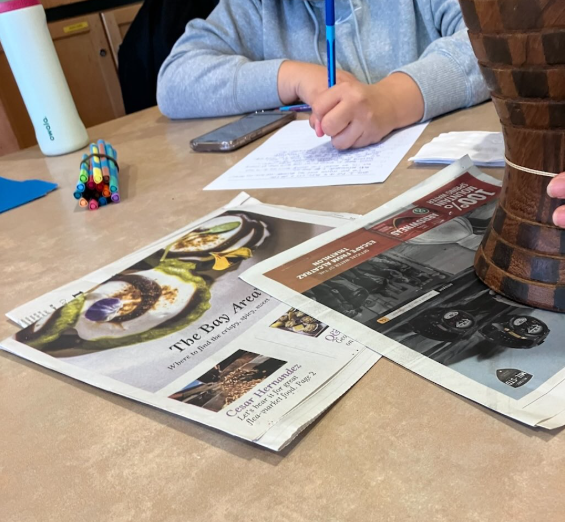
After a short round of introductions, students made their way to the Canyon Oaks Youth Center to meet the youth residents. At the Treatment Facility, Dr. Elizabeth led the group in an interactive icebreaker where we explored body percussion sounds and shared our favorite musical genres. Then, it was off to meet our groups! Broken into teams of 2-3 Stanford students and 2-3 youth residents, groups began brainstorming potential melodies and themes. Groups will have the opportunity to write and produce their own songs with the hopes of creating a class album to be published on Spotify at the end of the 10 week period.
As a way to get to know the youth, my partner Oliver and I wanted to uncover our teen’s personal interests and hobbies. We talked about their favorite reality TV shows, most listened to artists, and favorite genres. Some included: The Marias, Stray Kids, Olivia Rodrigo, and the TV show Survivor. Our group liked the idea of creating an upbeat song that could accompany any type of mood: a day at the beach, a long car ride, or simply just chilling at home. Additionally, one student mentioned his love of beat mixing on computer software. So, Oliver and I tasked him with creating a demo that could potentially serve as the foundation for our song.
As we wrapped up the Friday afternoon, each group was tasked with taking a recording device home to capture the following week’s sound environment. Recordings could range from nature sounds while walking to class, squeaking doors, or any other sound that caught our attention. By next week, the hope is that these recordings will mesh together to create a unique array of sounds that will be interwoven into our songs.
After we said our goodbyes, it was time to head back to campus for the seminar portion of the class. To explore the intersection between psychology and music, we all read Paulo Freire’s Pedagogy of the Oppressed and Mary Ann Burris’s article “Photovoice: Concept, Methodology, and Use for Participatory Needs Assessment.” We began the seminar by sharing reflections and insights about our first visit to Canyon Oaks. Time and time again, my classmates mentioned the level of collaboration and engagement the youth residents showcased. In fact, many people spoke to the “flipped classroom” style of the workshop. For example, many of the youth were teaching us about their musical expertise, not the other way around.
As a segue to this week’s reading, the class spoke to Freire’s disapproval of the “Banking Model of Education” that merely treats education as a transactional relationship between teachers who bestow knowledge and students who consume it. Freire’s theory instead encourages the eradication of power dynamics between the student and teacher, as both parties can teach/learn from the other.
Additionally, our class discussed the requirements for a piece to be considered “ethnographic.” We also explored how photovoice can help invite new audiences to share their lived experiences through different literary modes. Ethnography from a musical standpoint describes the method of analyzing music in a cultural and social context while photovoice documents lived experiences through storytelling and photography. In this class, we will explore the intersection of the two, often in relation to a new term called sound voice. In preparation for next week’s seminar, we were challenged to explore sound voice and its relation to the participation vs. performance aspect of music.
Brigette
 Humans in Harmony