
- How the group dynamic has been
The collaboration between the students and me at the youth center has been such a rewarding and fun process. Coming into the first day of week 1, the student my partner and I have been collaborating with, already had lyrics written down – inspired by her experiences, thoughts, and feelings. One week during our collaboration, she told us: “I want this music to be something that my brothers and sisters can listen to.” This was incredibly touching to me and we have been working hard to shape her lyrics into something she can be proud of sharing with her family and friends.
We have had our ups and downs. During some workshops, we were stuck and unable to come up with a melody or figure out the right lyrics to fit the beat. Those instances either lead to laughing about inside jokes we created or getting to know each other and our daily lives. However, other times, we would come up with a random melody or suggest a different way to sing the song, bouncing ideas off of each other until we found a solution.
This week we were able to bring together everything we had been working on during our past workshops, including the lyrics, the melody, the beat, and an ending melodic part with the viola. After our rehearsal, the student we are collaborating with jumped with joy and asked for her sponsor to sit in and listen. Being able to play a draft of the piece that she was excited to
share was a beautiful experience because that is what we set out to do from the beginning. I am excited to see how the rest of the project unfolds as we get closer to recording! - How the class is going
As a big group at the beginning of the workshop, we do a group activity where we make sounds and music together. It has so far been an insightful experience, especially learning about group collaboration activities like “Pass the Clap.” These activities have allowed me to connect with other members of the youth which has made the experience enjoyable.
Our group is very dynamic and we have learned to build trust and communication with each other through the process. In the beginning, we had a baseline for the music we were aiming for – rap style R&B. While we had the lyrics and the beat, we were stuck on the expansion of the piece. What should the melody sound like? What should be put at the beginning
and end of the piece? Looking for inspiration, we shared songs we love and instruments we had access to. Using the resources we had, we began to play around with the music. Our student began trusting us with her music by allowing us to add onto the melody and we trusted her ideas through the process. This ultimately led to a full draft of the piece in week 6 which we are all excited to continue exploring. - How the project is progressing
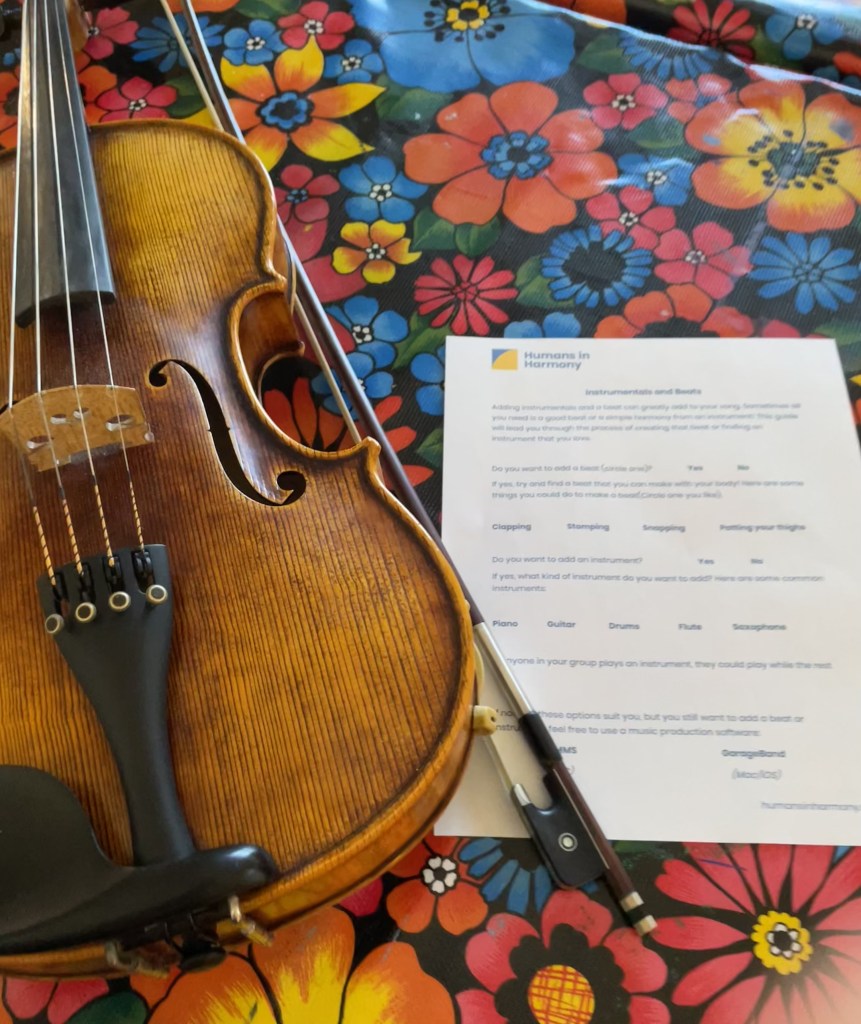
We had a few last main objectives we hoped to achieve before recording weeks 9 and 10. We are looking to add an alarm clock at the beginning of the piece (the student’s idea which I thought was clever). We hope that the beginning will symbolize the feeling of waking up and beginning another day. I am a violist and we introduced the idea of finishing the piece with a viola solo, fading out as a symbol of hope or appreciation for this life. In my time outside of class, I am writing down my musical thoughts on paper so that the student can share their ideas and build off of the solo.
Overall, we have been making really great progress with the song we are creating. But this is mainly thanks to the student who took the lead with the writing the lyrics and coming in with an idea of how she envisioned the song to sound like. At the end of the day, within our short time at the center, I see ourselves as vessels of ideas and musicality, helping to bring the student’s vision to life. - Summarizing in-class discussions/material
For our week 6 seminary, we continued with our psychoanalysis unit (something I find extremely fascinating).
We first delved into how we as students can examine our workshops through a psychoanalytical lens. In class and in the readings, we explored the concept of “transference” and how in the Lafargue clinic, patients and staff — rather than just the physician – were unintentionally triggering transference in a patient. We then began to discuss how the role of the physician and their training differ from a layperson in terms of administering treatments like transference, as well as the precautions of entrusting a lay individual with that role. However, how does this relate to the work we do within the youth center? To answer this question we then asked:
Just as there is a relationship between a therapist or psychiatrist and the patient, which is formed by the goal of “treating” the patient, can this concept be applied to our relationship with the youth at the center? Are the youth “treating” us in a sense by sharing their ideas in the song and sharing their day-to-day experiences? I continue to ask this while also wondering how I can be a collaborator with the student rather than a superior trying to “treat/teach” the youth between the right and wrong things to do in music or in life.
We continue to explore how we can apply the psychoanalytic lens to our work at the center.
Overall, I have truly enjoyed this experience and am excited to see the beautiful music we are creating together 🙂
Blog post by Vibiana Cardenas
 Humans in Harmony